
Uncategorised
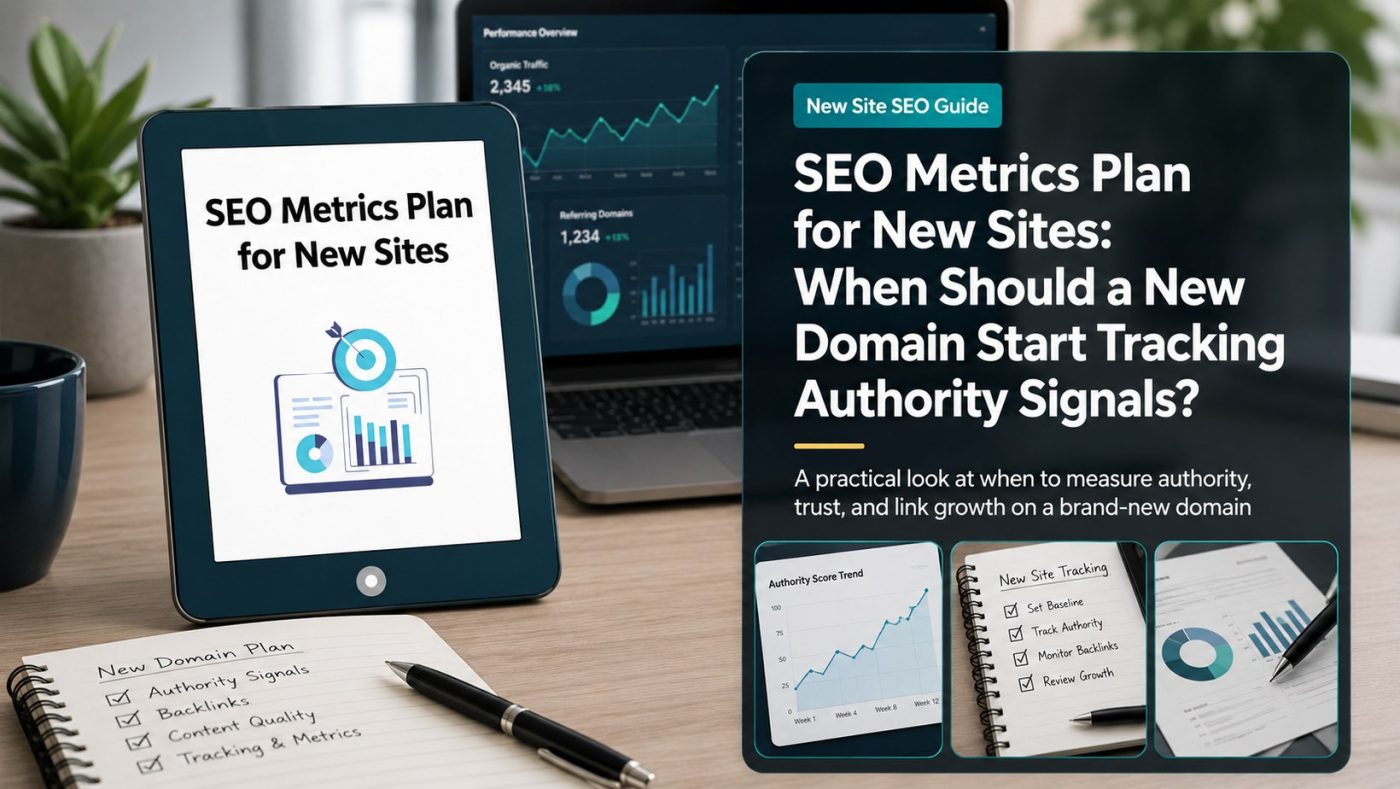
SEO Metrics Plan for New Sites: When Should a New Domain Start Tracking Authority Signals?
Aug
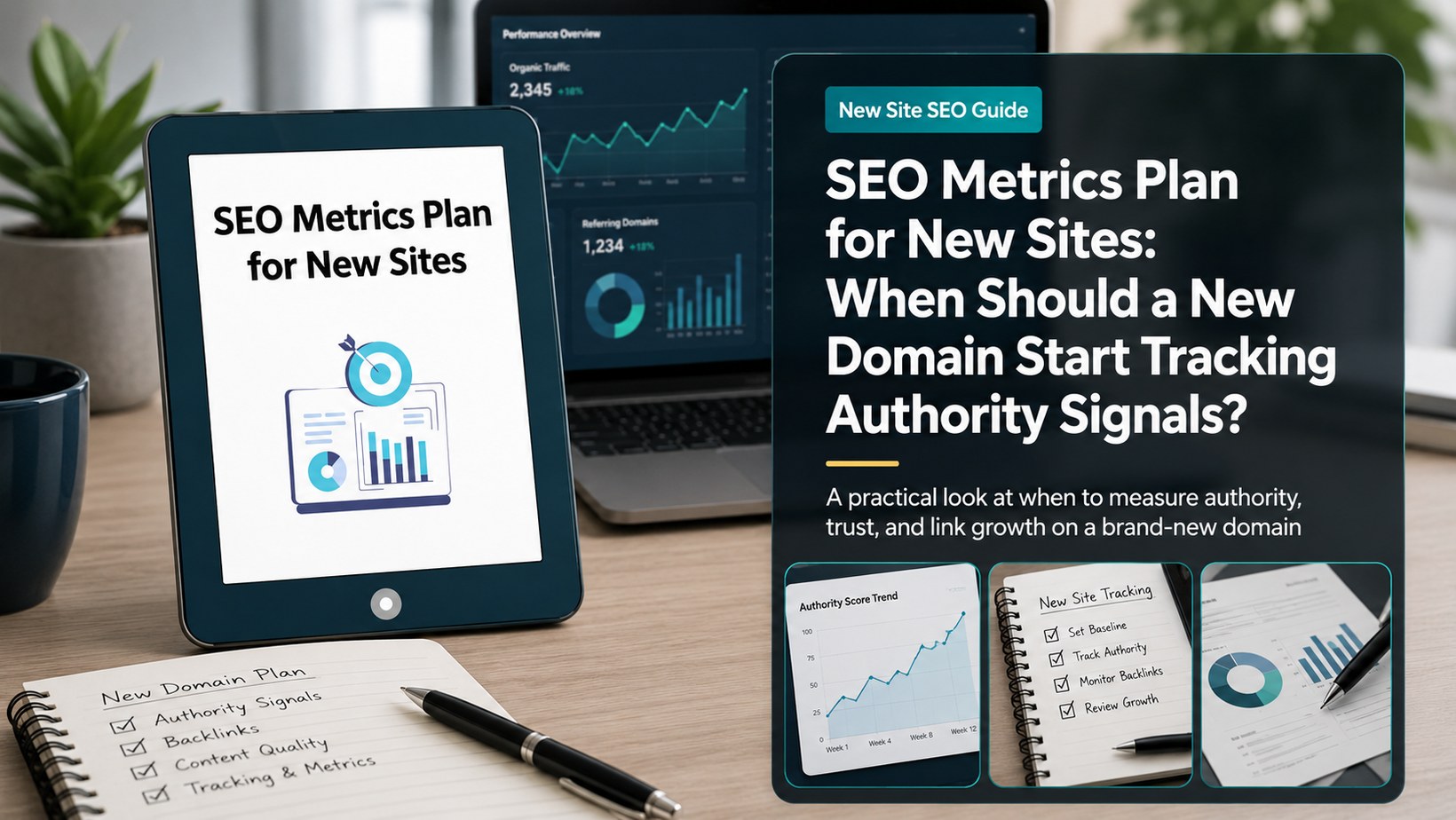
An SEO Metrics Plan for New Sites should start tracking authority signals early enough to create a baseline, but it should not mistake third-party scores for Google ranking factors. A new domain can record backlink growth, referring domains, link quality, Search Console impressions, indexation, branded search, and conversion data from the beginning without setting an arbitrary authority score as the goal.
Early measurement is valuable because it shows where links come from, which pages attract them, whether suspicious spikes appear, and how the profile changes alongside content and search visibility. The plan becomes more useful when third-party metrics are treated as comparative diagnostics and cross-checked with first-party search data.
How An SEO Metrics Plan For New Sites Should Use Authority Data
Authority tools summarize large link graphs differently, so their numbers are not interchangeable. Domain Rating, Domain Authority, Trust Flow, and other scores use proprietary calculations and databases. Use the same tool consistently for trend analysis instead of combining scores into one benchmark.
A new site should record the baseline even when scores are low. That makes later growth interpretable and can reveal whether a campaign created a healthy pattern of relevant referring domains or an unnatural burst from unrelated sources.
The strongest reporting separates domain-level trends from page-level outcomes. A rising domain score is not useful if important pages remain unindexed, receive no relevant impressions, or fail to convert visitors.
SEO Metrics Plan For New Sites Signals To Track Carefully
Create A Baseline Without Turning It Into A Target
Record third-party authority scores, referring domains, indexed pages, organic impressions, branded searches, and conversion tracking at the same point in time. The baseline gives future reports context.
A consistent set of domain authority benchmarks can document starting conditions, provided the report also identifies the tool and date used.
Use Trust Metrics Consistently
Majestic Trust Flow is a proprietary metric based on how closely sites are linked to a seed set of trusted sites. It can help compare link profiles inside that tool, but it is not a Google metric.
Majestic explains trust flow monitoring in its own documentation, which is the right reference for interpreting the score rather than treating it as a search-engine value.
Track Referring Domains And Linked Pages
Count growth, but also examine relevance, source quality, destination pages, link placement, and whether new links diversify the profile. One strong industry reference can matter more strategically than many unrelated placements.
A review of new website backlink metrics should include source and destination context instead of only aggregate counts.
Understand What DR Represents
Ahrefs Domain Rating estimates the strength of a website’s backlink profile on a 0–100 scale within Ahrefs. It is useful for comparisons inside the platform but should not be reported as a Google score.
Ahrefs documents DR growth tracking and the calculation principles behind Domain Rating.
Separate Third-Party Authority Metrics From Search Outcomes
Each metric answers a different question. A good dashboard labels the source and intended use.
| Metric | What It Helps Describe | What It Does Not Prove |
|---|---|---|
| Referring domains | Breadth of websites linking to the site | Quality or relevance by count alone |
| Ahrefs DR | Relative backlink strength in Ahrefs | A Google ranking score |
| Majestic Trust Flow | Trust-oriented link proximity in Majestic | Direct ranking impact |
| Search impressions | How often pages appeared in Google Search | Whether users converted |
| Organic conversions | Business outcomes from organic visits | Cause of every ranking change |
| Indexed core pages | Whether intended pages are discoverable/indexed | Authority strength by itself |
Build A Reporting Cadence That Avoids Metric Chasing
Save A Repeatable Baseline Report
Use the same tool settings, domain version, date range, and definitions every time. Capture both current values and the change since the previous report so stakeholders can distinguish absolute score from trend.
An authority baseline report should state the source of each metric and avoid implying that a purchased score alone guarantees organic growth.
Develop The Link Profile Around Real Assets
Links are easier to defend when they come from useful resources, partnerships, citations, PR, industry participation, or content people genuinely reference. Match link efforts to pages that deserve external endorsement.
A controlled link profile development plan should be reviewed for topical relevance, destination diversity, and whether the placements make sense for users.
Keep First-Party Search Data In The Report
Search Console provides impressions, clicks, queries, pages, countries, and devices from Google Search. That data should sit beside authority metrics so reports do not celebrate link scores while search visibility remains flat.
Use Search Console for early SEO measurement and compare authority changes with actual search performance.
New-Domain Metrics Dashboard
- Record the tool and date for every score
- Track referring domains and lost domains
- Review the most-linked destination pages
- Flag sudden unrelated link spikes
- Track Search Console clicks and impressions
- Monitor indexed core pages
- Separate branded and non-branded demand where possible
- Record qualified organic conversions
- Add notes for launches and campaigns
Do not change strategy because a third-party score moved by one or two points. Investigate larger trends and connect them with links gained or lost, content changes, crawling, demand, and actual search outcomes.
Use Authority Metrics As Diagnostic Context
Ahrefs explicitly states that search engines do not use Domain Rating or Domain Authority as ranking factors. That distinction should appear in stakeholder reporting so a third-party KPI does not become the business objective.
The new site’s real goal is to build a discoverable set of useful pages that earn qualified search visibility and business results. Authority metrics can help audit the link side of that system, while Search Console and conversions show whether search performance is moving in the intended direction.
For clarity on the limitation of third-party scores, Ahrefs explains that search engines do not use Domain Rating or Domain Authority as ranking factors.
Start Tracking Early, But Do Not Optimize For A Tool Score
An SEO Metrics Plan for New Sites should establish authority and backlink baselines from the beginning so later changes have context. Referring domains, DR, Trust Flow, lost links, linked pages, and quality reviews can all support diagnosis.
Keep those metrics beside indexation, Search Console performance, landing-page growth, and conversions. The healthiest plan uses authority scores as comparative evidence while optimizing the site for useful content, discoverability, and real search demand.
Frequently Asked Questions
When should a new site first record DR or Trust Flow?
Once the live domain is stable enough to measure, record the baseline. The first value may be low; the purpose is to create a reference point.
Is Domain Rating a Google ranking factor?
No. DR is an Ahrefs metric. It can help compare backlink profiles within Ahrefs but is not a Google ranking score.
How often should authority metrics be checked?
Monthly is often enough for normal reporting. Check after major campaigns or unexpected link changes when faster diagnosis is useful.
Should a new site buy links just to increase authority scores?
No. Link activity should make editorial and business sense. Optimizing for a proprietary score can encourage low-quality or irrelevant placements.
What should be reported beside authority metrics?
Include referring domains, linked pages, Search Console impressions and clicks, indexation, organic landing pages, conversions, and notes about major campaigns or site changes.
