
Uncategorised
New Site SEO Plan: What Should Be Prioritized During the First 90 Days After Launch?
Aug
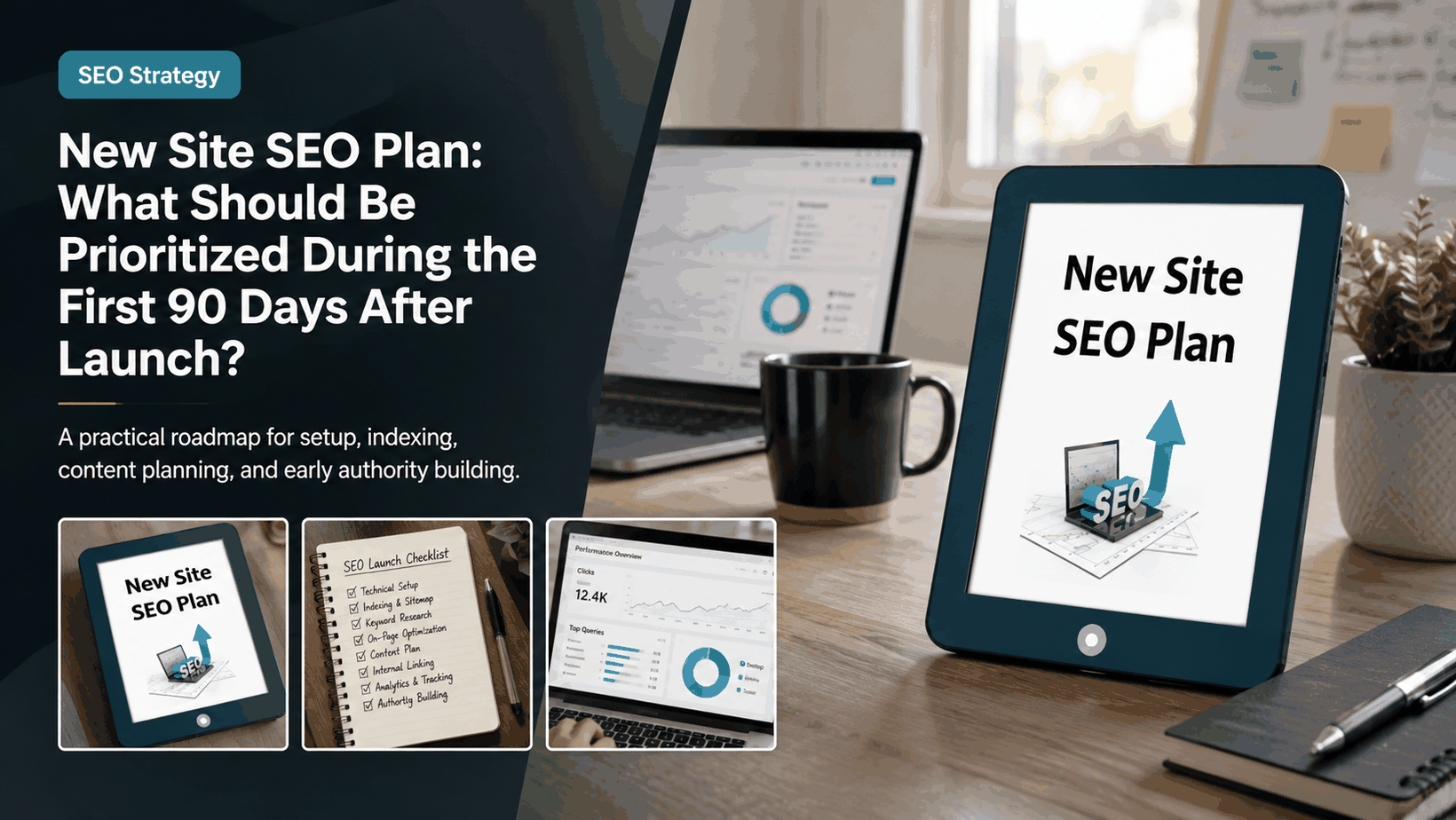
A New Site SEO Plan should spend the first 90 days making the website understandable, crawlable, useful, and measurable before chasing aggressive growth targets. New domains have limited history, few external signals, and often incomplete content, so the priority is to create a clean technical foundation and a small set of strong pages that clearly match the business’s most important search intents.
The first quarter is also a period for learning. Search Console begins revealing how Google discovers and interprets pages, analytics shows how visitors move through the site, and early content performance exposes gaps in keyword mapping. A plan should use that evidence to decide what to build next instead of publishing dozens of speculative pages at launch.
How A New Site SEO Plan Should Sequence The First 90 Days
Days 1 to 30 are foundation work: verify the preferred domain, redirects, robots directives, canonical tags, sitemap, analytics, Search Console, page titles, core content, mobile usability, and conversion actions. The goal is to eliminate avoidable discovery and measurement problems.
Days 31 to 60 are about evidence and expansion. Review which pages are indexed, which queries begin appearing, how users interact with key landing pages, and whether search intent is mapped correctly. Improve weak core pages before creating many adjacent topics.
Days 61 to 90 can increase content and authority work while technical monitoring continues. Early outreach, citations when local, useful resources, and relevant backlinks should point to pages that already have a clear purpose and strong internal connections.
New Site SEO Plan Priorities That Reduce Early Rework
Optimize The Domain And Core Architecture
A new domain needs consistent canonicalization, HTTPS, preferred host handling, readable URLs, and a hierarchy that keeps important pages within a sensible number of clicks. Changing the architecture repeatedly after indexation creates redirect and internal-link cleanup.
A structured new domain optimization service should begin with architecture and technical controls rather than bulk content publishing.
Validate The Launch Before Promotion
Check noindex directives, robots.txt, sitemap URLs, status codes, templates, structured data, forms, mobile navigation, and analytics before driving traffic. A launch checklist reduces the risk of marketing a site that search engines or customers cannot use correctly.
Google Search Central’s SEO guidance is a reliable reference for a launch SEO checklist covering crawlable links, useful content, titles, and site organization.
Establish Indexation Deliberately
Submitting a sitemap can help discovery, but it does not guarantee that every URL will be indexed. Keep the sitemap limited to canonical indexable URLs and use Search Console to investigate important pages that remain excluded.
The official Google documentation on crawling and indexing supports a controlled initial indexation setup rather than assuming every published URL deserves indexation.
Build Early Authority Around Useful Pages
The first links should make editorial sense and point to pages that provide genuine value. A new site does not need an artificial burst of unrelated links; it needs a credible footprint that grows with content and business visibility.
An early backlink profile should be reviewed for relevance, destination pages, anchor diversity, and pacing.
First 90-Day SEO Roadmap
A staged plan helps new sites avoid optimizing every possible topic before search engines and users provide feedback.
| Period | Primary Objective | Evidence to Review |
|---|---|---|
| Days 1–30 | Technical foundation and core pages | Indexability, sitemap, conversions, crawl results |
| Days 31–60 | Improve core relevance and internal links | Queries, impressions, page engagement, exclusions |
| Days 61–90 | Expand proven topics and authority | Landing-page growth, backlinks, conversions |
| End of quarter | Prioritize next constraint | What limits visibility or leads now? |
Create A First-Quarter Workflow That Can Be Audited
Monitor How Search Engines Reach The Site
Internal links, server availability, redirects, canonical choices, and URL parameters can all affect discovery. Crawl the site after major releases and compare findings with Search Console rather than relying on the sitemap alone.
Google’s crawling documentation is useful when evaluating crawlability for new websites and prioritizing errors that affect important pages.
Map Keywords To One Primary Destination
Assign each core service, product, and informational intent to the most appropriate URL. The map should prevent several pages from targeting the same commercial phrase and should identify supporting topics that can link into core pages.
A disciplined starter keyword mapping process creates a baseline for later content expansion.
Review The Whole Quarter As One Learning Cycle
The first quarter should end with a comparison of index coverage, queries, top pages, conversions, links, and technical issues. That review determines whether the next quarter needs more content, stronger pages, local work, or authority.
A practical approach to first quarter SEO should keep the roadmap small enough to learn from real search data.
New-Site Launch And Growth Checklist
- Verify preferred domain and HTTPS
- Confirm robots and noindex rules
- Submit a clean XML sitemap
- Connect Search Console and analytics
- Map one main intent to each core page
- Check titles, headings, and internal links
- Test forms and conversion tracking
- Review indexed versus submitted pages
- Record a 90-day performance baseline
Keep a launch change log with dates. When visibility changes, knowing when redirects, templates, content, tracking, or plugins changed makes diagnosis much faster.
Use Early Metrics As Direction, Not A Final Score
A new domain may receive impressions before meaningful traffic, and query patterns can change as Google gains more context. Track which pages are being discovered, what intents they appear for, and whether those impressions align with the business.
Avoid treating third-party authority scores as a substitute for Search Console and business outcomes. They can be useful for comparative link analysis, but the first-quarter objective is a technically sound site with improving relevance, qualified traffic, and a credible link profile.
Keep The New Site SEO Plan Focused For The First 90 Days
A New Site SEO Plan works best when it sequences foundation, learning, and expansion. Make the site crawlable and measurable first, strengthen the most important pages second, then add supporting content and authority based on evidence.
The first quarter should leave the business with more than rankings: a clean architecture, reliable tracking, known indexation status, a keyword-to-page map, a documented link baseline, and a prioritized roadmap for the next stage.
Frequently Asked Questions
Should every page be indexed immediately after launch?
No. Important canonical pages should be discoverable, but utility, duplicate, filtered, or low-value URLs may not belong in the index.
How many blog posts should a new site publish in 90 days?
There is no fixed number. Publish only topics that support a defined user need and site architecture, and prioritize core commercial pages first.
When should a new site start link building?
Once useful destination pages and technical foundations exist. Start with relevant, defensible opportunities rather than a large artificial burst.
Is Search Console enough for new-site measurement?
Use it alongside analytics and conversion tracking. Search Console shows search performance and indexing signals, while analytics helps evaluate onsite behavior and outcomes.
When should the 90-day plan be revised?
Revise it when real crawl, indexation, query, conversion, or competitive data shows that the original priority is no longer the main constraint.
