
Uncategorised
Local SEO Package: What Should a Service Business Check Before Choosing a Local Ranking Plan?
Aug
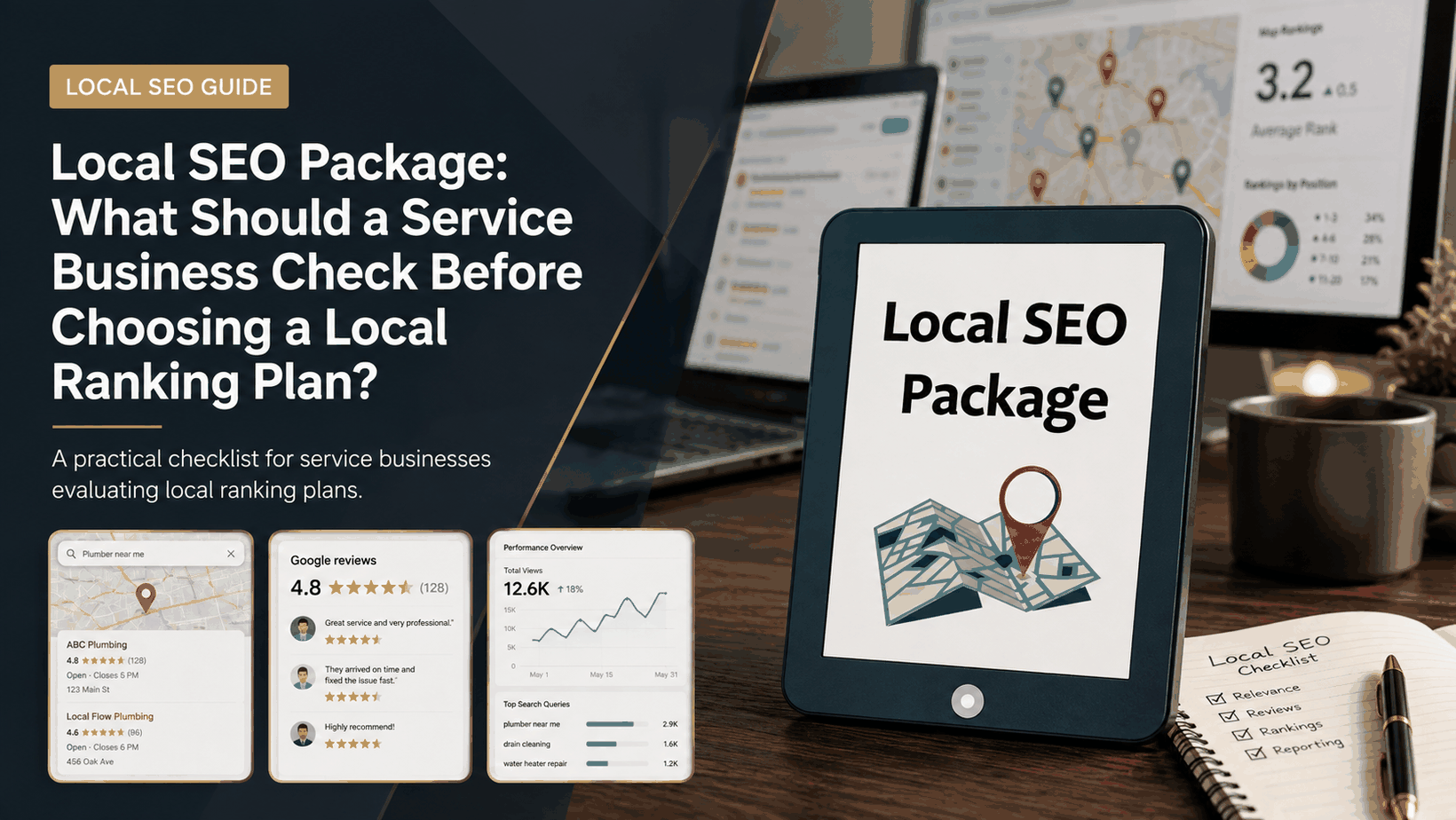
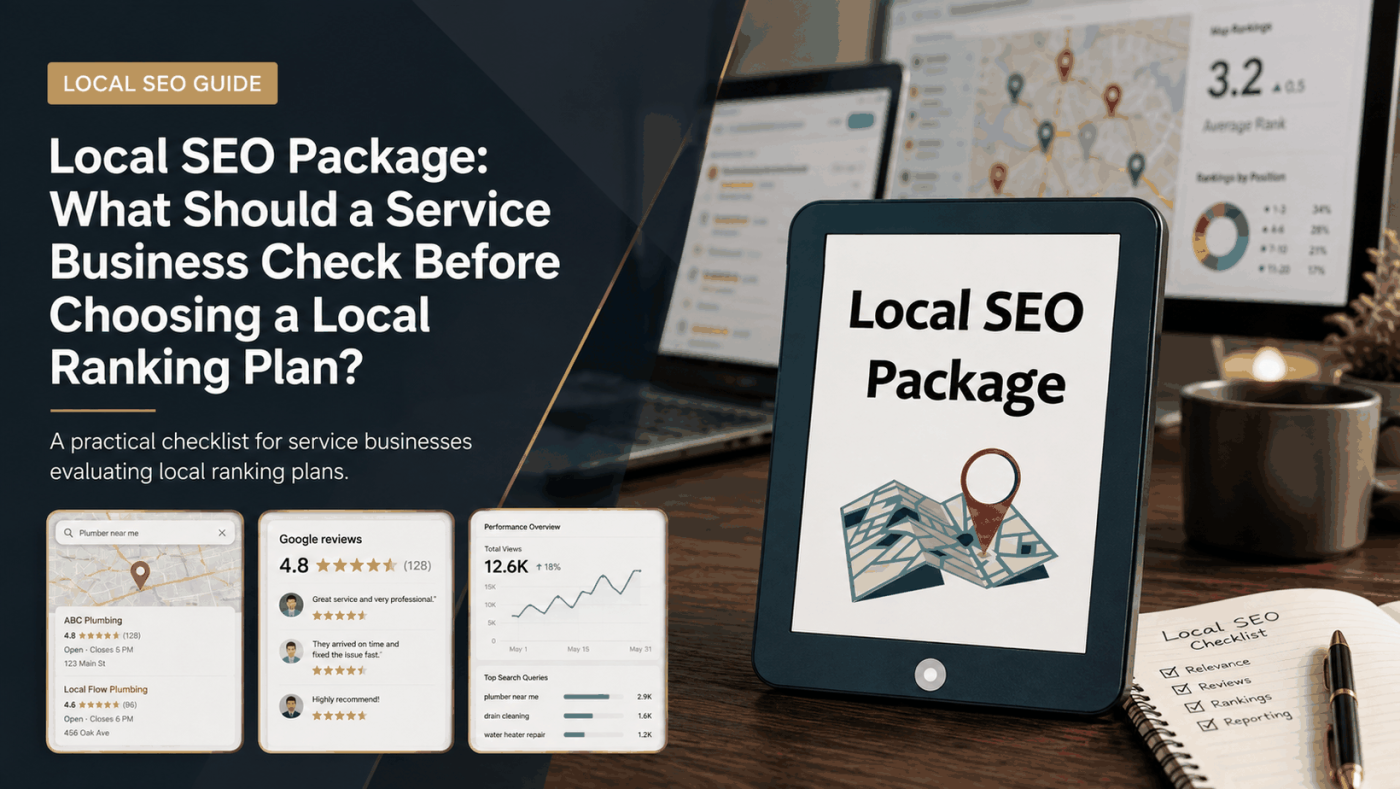
A Local SEO Package should make it clear how a service business will become easier to find for nearby customers, what work will be completed each month, and how progress will be measured. A package is more useful when it connects Google Business Profile work, website location signals, citations, reviews, technical health, and conversion-focused landing pages instead of treating each activity as an isolated checklist item.
The right scope also depends on the business model. A single-location plumber, a multi-location clinic, and a service-area contractor have different location data, page needs, competition, and lead paths. Before buying, define the markets that matter, the services that produce qualified leads, and the baseline visibility that the provider will be expected to improve.
How A Local SEO Package Should Be Structured
A Local SEO Package should begin with discovery and validation. The provider needs the correct business name, address or service-area setup, phone number, categories, website URLs, hours, service list, and target geography before changing profiles or building citations. Incorrect source data can be repeated across directories and create cleanup work later.
The next layer is relevance. Website pages and the business profile should describe the actual services customers search for, while location pages need unique information that helps a visitor understand coverage, availability, proof, and next steps. Creating dozens of near-identical city pages is not a substitute for useful local content.
Finally, the package should define measurement. Local work can influence profile interactions, calls, direction requests, organic landing-page visibility, conversions, and branded demand. A useful report shows what changed and what action follows from the data rather than listing rankings without context.
Local SEO Package Components To Evaluate Before Buying
Citation Coverage And Data Control
Directory work should start from a verified source of truth for the business. The provider should explain whether the scope covers creation, correction, suppression of duplicates, or monitoring, and whether niche or local directories are chosen for relevance rather than raw quantity.
A clearly defined local citation package is useful for comparing whether name, address, phone, website, and category details are handled consistently across listings.
Map Visibility Work
Profile optimization should include accurate categories, services, business information, review workflows, and changes that reflect the real business. A credible plan will not claim that adding keywords to the business name or manipulating the address is a safe shortcut.
When evaluating a map pack optimization plan compare the deliverables with the business profile, website, and citation work already included so the same task is not charged twice.
Location Pages And Search Intent
Local landing pages should answer a distinct geographic need, show real service coverage, and help a user decide whether to contact the business. Useful pages can include service details, local proof, FAQs, process information, and clear conversion paths without swapping only city names.
A practical local landing page strategy should be tied to actual service areas and demand rather than an arbitrary target number of pages.
Business Information Consistency
NAP consistency is primarily a data-quality problem. The business should know which name, phone, address, hours, website URL, and service-area representation are authoritative before any large citation campaign begins.
A scoped NAP consistency service should state how incorrect listings and duplicates are handled, not just how many new listings are submitted.
Compare Local SEO Package Scope By Business Type
Use business complexity rather than package labels to decide how much work is necessary.
| Business Situation | Higher-Priority Work | Questions to Ask |
|---|---|---|
| Single physical location | Profile accuracy, core service pages, citations, reviews | Which nearby markets are realistically in scope? |
| Service-area business | Service-area settings, local pages, calls and lead tracking | How will address visibility and service areas be handled? |
| Multiple locations | Unique profiles, location pages, duplicate control | Is each location tracked and reported separately? |
| New business | Entity setup, indexing, baseline local signals | What must exist before expansion work starts? |
| Established but declining | Audit, competitor review, profile and site cleanup | Which losses are technical, relevance, or market related? |
Build A Local Ranking Plan Around Business Priorities
Distance And Market Reality
Local visibility is not determined by optimization alone. Google states that local results are based mainly on relevance, distance, and prominence, which means a provider should discuss realistic geography instead of implying that one location can dominate every distant market.
Understanding proximity ranking factors helps set realistic expectations for map visibility and explains why reporting should be segmented by location.
Location Keyword Mapping
Service and location phrases should be mapped to the right page or profile field so several URLs do not compete for the same local intent. The map should distinguish core service pages, genuine location pages, supporting content, and profile categories.
A focused approach to location keyword targeting can be compared with the site architecture before creating new local pages or citation campaigns.
Profile Operations And Support
Businesses that frequently change hours, services, photos, or promotions need an owner for profile maintenance. The package should clarify who handles updates, review responses, issue escalation, and change approvals.
Ongoing Google Business Profile support makes the most sense when responsibility, response time, and recurring tasks are clearly defined.
Questions To Ask Before Signing
- Which exact locations and services are included?
- Who owns and controls the Google Business Profile?
- How are citation corrections handled?
- Which website pages will be edited or created?
- How are review requests and responses managed?
- Which local metrics are reported?
- How often are strategy changes reviewed?
- What work requires business approval?
- What happens when a profile issue or suspension occurs?
A provider should be able to answer these questions without hiding behind a proprietary process. The business does not need every tactical detail, but it should understand what is being changed, why it matters, and how risk is controlled.
Measure Qualified Local Visibility Instead Of A Single Rank
Track calls, form submissions, booked appointments, profile actions, landing-page conversions, and visibility across the actual service area. A single keyword checked from one location can hide large differences in local results.
Review progress alongside operational changes. New reviews, service changes, seasonality, competitor openings, website redesigns, and profile edits can all affect results, so monthly reporting should connect performance with the work completed.
Choose A Local SEO Package With Clear Ownership And Scope
A Local SEO Package is easier to evaluate when every deliverable connects to a real local-search problem: inaccurate data, weak relevance, poor profile maintenance, thin location pages, limited authority, or unclear measurement.
Choose the plan that matches the business footprint and lead journey, keeps ownership transparent, and sets realistic geographic expectations. A smaller well-defined scope can be more valuable than a large list of activities that are never tied to customer acquisition.
Frequently Asked Questions
How long does a local SEO package take to show useful data?
Some technical and profile changes can be measured quickly, while broader visibility and lead trends need a longer comparison period. Establish a baseline before judging movement.
Should citations be built every month?
Not necessarily. Initial creation and cleanup may be front-loaded, with later work focused on monitoring, new relevant opportunities, and correcting business changes.
Does a local SEO package include Google Business Profile management?
It depends on the scope. Confirm whether categories, services, posts, photos, reviews, hours, and issue handling are included or priced separately.
Are local landing pages necessary for every city?
No. Create pages where there is genuine service coverage, search intent, and enough unique information to help users. Avoid near-duplicate city pages.
Can a provider guarantee top-three map rankings?
No credible provider can control every local result. Distance, competition, relevance, prominence, user context, and Google systems all influence visibility.
