
Local SEO Services
GMB Management and Ranking Service: Which Profile Activities Can Improve Local Search Engagement?
Aug
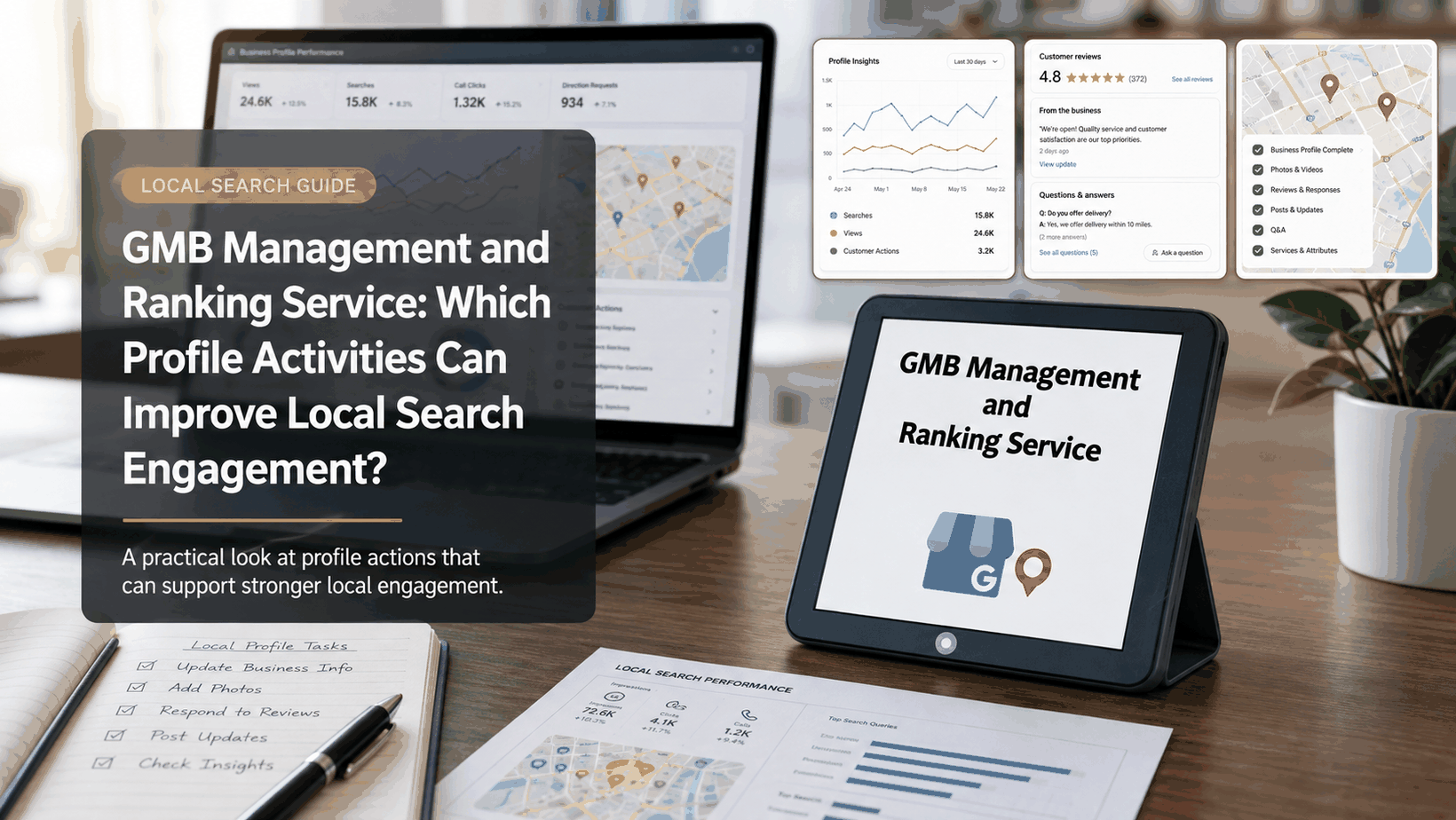
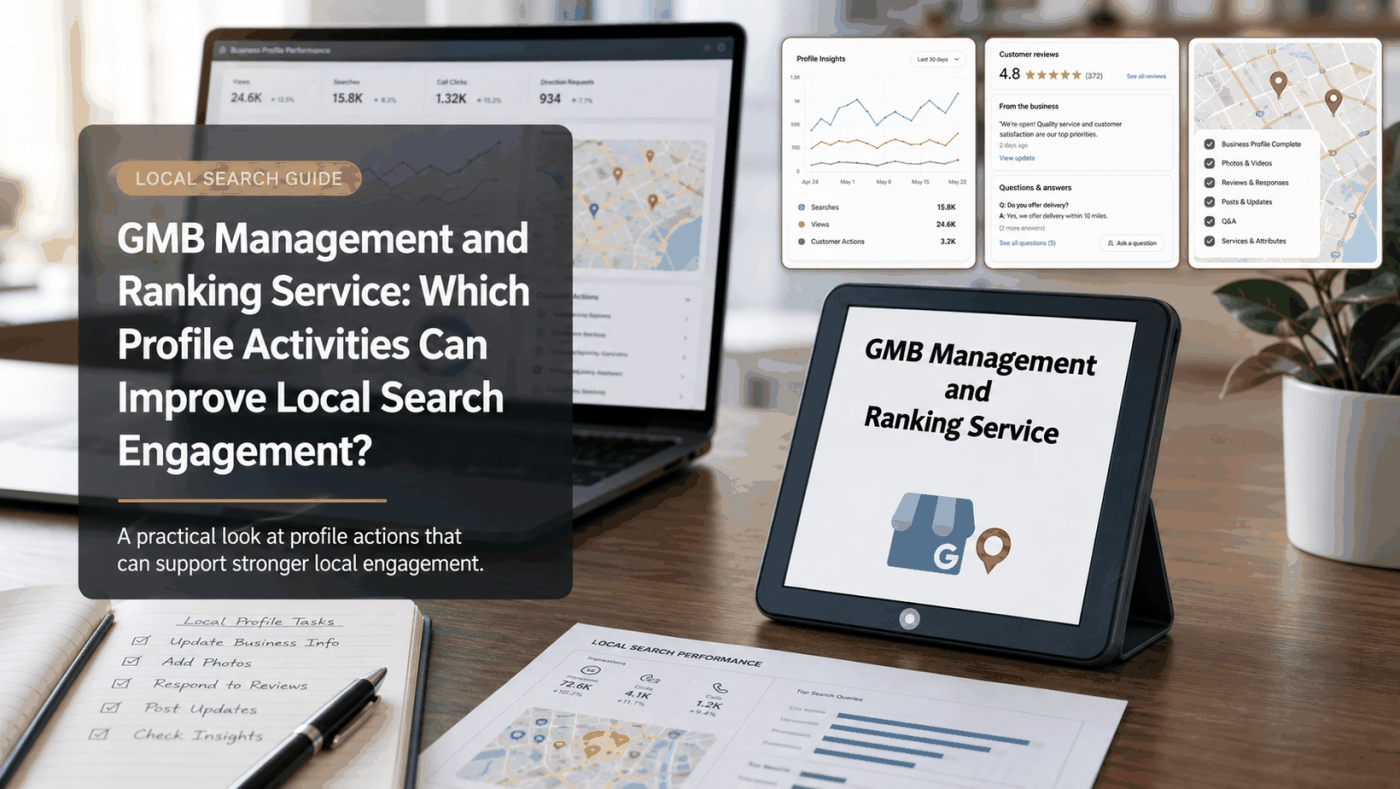
A GMB Management and Ranking Service should be evaluated as ongoing Google Business Profile operations, not as a promise that frequent edits will automatically produce higher map rankings. The profile needs accurate business information, appropriate categories, services, hours, photos, review handling, policy compliance, and a process for monitoring unexpected changes.
Management becomes especially valuable when several employees, agencies, or locations are involved. Clear ownership prevents unapproved edits, outdated hours, ignored reviews, duplicate profiles, and inconsistent service information. The service should also coordinate profile changes with the website and other local data sources.
What A GMB Management And Ranking Service Should Manage
A GMB Management and Ranking Service should begin with access and baseline validation. Confirm ownership, managers, business name, primary and additional categories, address or service areas, phone, website, hours, opening date, attributes, services, and existing reviews before publishing new content.
The service should distinguish maintenance from experiments. Updating holiday hours or replacing outdated photos is operational maintenance; changing categories or service areas can affect relevance and should be documented with a reason and outcome.
Performance reporting should focus on customer actions and search visibility trends while acknowledging that map results vary by location. Profile activity can improve completeness and engagement, but it cannot remove the influence of distance, competition, or broader prominence.
GMB Management And Ranking Service Activities Worth Reviewing
Publish Useful Profile Updates
Posts can highlight offers, events, service changes, seasonal information, and important announcements. They should support customers rather than become a stream of repetitive keyword text.
A consistent business profile post management process should define content source, approval, publishing frequency, and expiration checks.
Respond To Reviews Professionally
Responses should be timely, specific enough to sound human, and careful with private customer information. Negative reviews need escalation rules so a public reply does not become a dispute.
Google provides direct guidance for a local review response workflow including how businesses can read and reply to reviews.
Choose Categories Based On The Real Business
The primary category should describe the core business, while additional categories can cover other legitimate activities. Category changes should follow actual services, not a rotating list of keywords.
Google’s official guidance on GBP category optimization explains selecting the most specific categories that represent what the business is.
Keep Photos Current And Representative
Good photos can help customers understand location, team, products, work quality, and accessibility. Use recent, clear images and remove outdated media when the profile allows it.
Google’s profile photo updates guidance explains supported photo types and quality considerations.
Separate Profile Maintenance From Ranking Claims
Not every profile action has the same objective. Use this distinction when reviewing a service proposal.
| Activity | Primary Purpose | Review Frequency |
|---|---|---|
| Hours and contact details | Accuracy and customer experience | Whenever operations change |
| Categories and services | Relevance and profile accuracy | Periodic or after service changes |
| Reviews and responses | Trust and customer communication | Ongoing |
| Photos | Freshness and customer context | Ongoing or scheduled |
| Posts | Current information and offers | Based on business needs |
| Performance reporting | Identify trends and opportunities | Monthly or agreed cadence |
Create A Profile Governance Workflow
Configure Service Areas Correctly
Service-area businesses should list areas they actually serve and follow address display rules. Expanding the service-area setting does not physically move the business closer to every searcher.
Review Google’s rules for service area configuration before changing cities, postal codes, or address visibility.
Interpret Engagement As A Diagnostic Signal
Calls, website clicks, messages where available, direction requests, and searches can show how users interact with a profile. Use trends and market context instead of claiming that one activity directly caused a ranking change.
Google Business Profile Performance provides official context for map engagement signals and the metrics available to profile owners.
Maintain The Profile After The Initial Optimization
Hours, services, attributes, photos, links, and ownership can become outdated. Regular checks also catch user-suggested changes and operational updates that would otherwise create a poor customer experience.
A defined local profile maintenance scope should state which fields are checked, how often, and who approves material changes.
Management Controls To Put In Writing
- Keep the business as primary owner
- List approved managers and agencies
- Record baseline categories and services
- Define response standards for reviews
- Maintain holiday and seasonal hours
- Approve photo and post sources
- Document material profile changes
- Monitor unexpected edits or duplicates
- Review performance with website lead data
Profile governance matters because local visibility work often spans several platforms. A change log prevents the business from guessing which agency, employee, or platform changed a key field.
Measure Profile Engagement Alongside Local Conversions
Use Profile Performance data to monitor available interactions, but also tag website traffic and measure calls or forms that become qualified leads. A rise in profile actions is more meaningful when sales teams can confirm better local enquiries.
Compare market segments and time periods fairly. Weather, seasonality, advertising, review volume, new competitors, promotions, and changes in opening hours can influence engagement independently of profile management.
Choose Management That Protects Accuracy And Customer Experience
A GMB Management and Ranking Service should keep the profile accurate, complete, policy-compliant, current, and connected to the rest of the local marketing system. Posts, photos, reviews, categories, services, and reporting all need an operational reason.
The business should retain ownership, understand material changes, and receive reporting that connects profile activity with customer outcomes. Avoid services that rely on keyword-stuffed names, fabricated locations, or guaranteed map positions.
Frequently Asked Questions
How often should a Google Business Profile be updated?
Update whenever real business information changes. Posts, photos, and review responses can follow a practical schedule based on customer needs rather than forced daily edits.
Should the agency own the business profile?
The business should retain ownership and grant the agency the appropriate manager access. This reduces access risk if the relationship ends.
Do Google Business Profile posts directly improve rankings?
Posts can improve freshness and customer communication, but local rankings depend on multiple factors. Avoid treating posting frequency as a guaranteed ranking lever.
How many categories should a profile use?
Use the primary category that best describes the core business and only relevant additional categories that represent real activities.
What should monthly profile reporting include?
Include material changes, review activity, available profile performance metrics, website actions, local visibility trends, issues, and next priorities.
